
Downsizing
Downsizing to a One-Level Home in Greenville: A Room-by-Room Plan
Downsizing to a one-level home, at a glance
Start a move to a one-level home by measuring the new rooms and the furniture you want to keep, then decide what belongs in each space. Set family keepsakes aside before selling or donating anything, and plan for the remaining belongings through an estate sale, donation, or cleanout. Hawthorn Estate Co. can coordinate packing, movers, and setup so familiar essentials are in place in the new home.
- Compare the new floor plan with the measurements of favorite furniture
- Choose everyday essentials for each room and allow for less storage
- Start garages and attics early, and protect keepsakes before anything leaves
- Offer unneeded furniture to family before considering sale or donation
- Pack and label by room, with bedding and daily essentials easy to find
Or email info@hawthornestateco.com
Moving from a two-story family home into a single-level home or apartment is a big change, but most of the hard decisions come down to one practical question: what will fit? The new place may have fewer bedrooms, a smaller kitchen, and far less storage. Once you know what the new rooms can hold, the rest of the choices get much easier.
At Hawthorn Estate Co., this is where we start with every family we help. If you are looking for downsizing help in Greenville SC, here is the room-by-room plan we use, written so you can follow it on your own or hand any part of it to us.
Start with the new floor plan
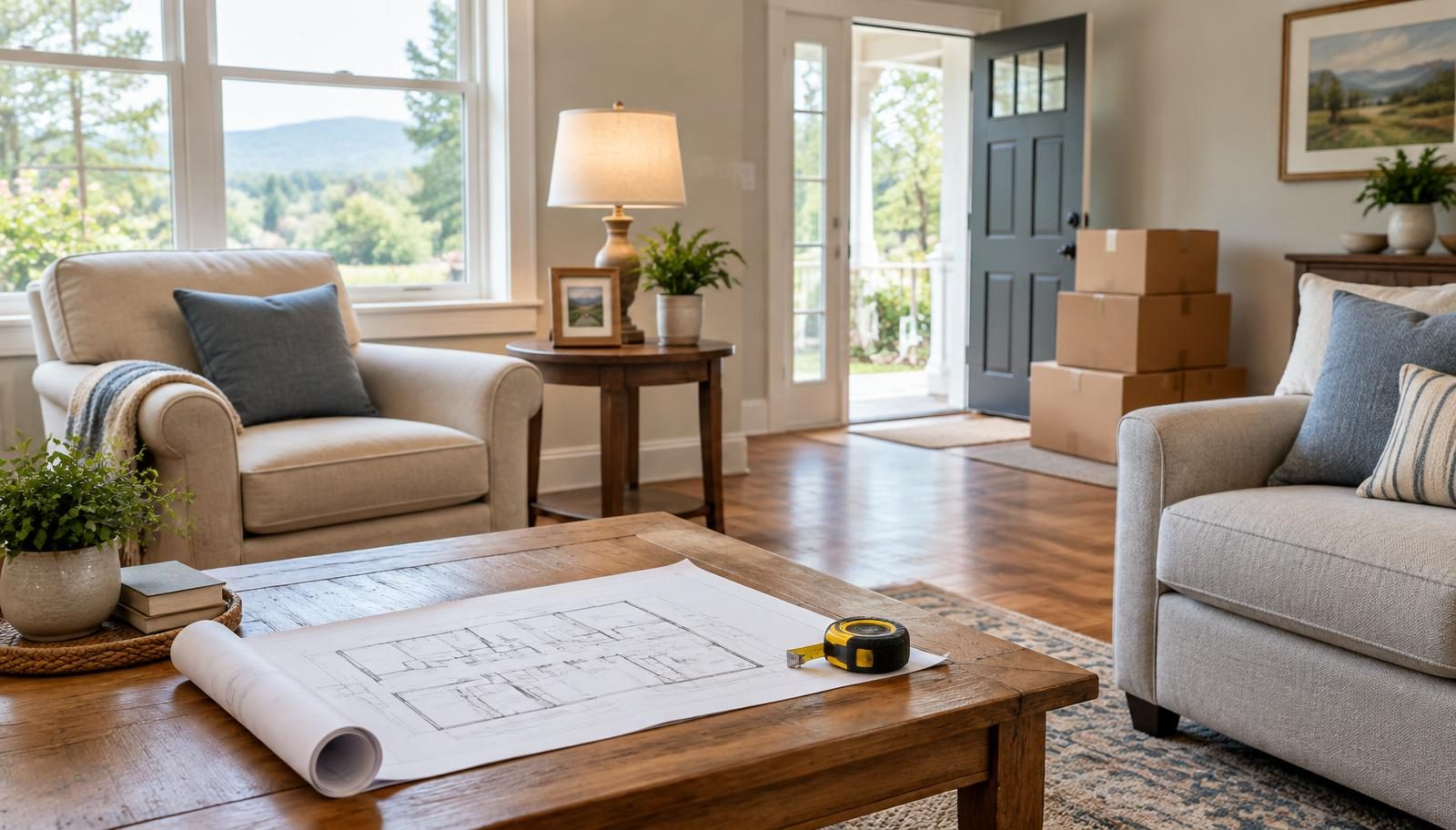
Before you sort a single drawer, get the floor plan of the new home. Most retirement communities and apartment buildings have one, and a builder can often provide one for a newer single-level house. If there is no floor plan, a tape measure and a notepad work just fine.
Measure each room, and note where the windows, doors, closets, and outlets are. Then measure the furniture you love most: the favorite chair, the bed, the dresser, the dining table. When you set the two lists side by side, it becomes clear what has a place and what does not. This takes the guesswork, and a lot of the worry, out of every decision that follows.
If you are not sure where to begin, our free 18-item printable downsizing checklist on the downsizing help page walks you through it, from the first few months before the move to the first week after.
Living room
The living room is usually where people feel most at home, so start with the pieces that matter for daily comfort. A favorite recliner, a reading lamp, a side table, and the television almost always come along. A full sofa set, a second chair, and large entertainment centers often do not fit a smaller room. Pick one seating arrangement that works for everyday life and for a visit from family, and let the rest go.
Kitchen
Most kitchens in a smaller home have fewer cabinets and less counter space. Keep the everyday dishes, a few good pots and pans, the coffee maker, and the tools you reach for each week. Holiday platters, extra small appliances, duplicate baking pans, and the overflow in the pantry are the easiest things to part with. If you love to cook, keep the pieces you truly use and skip the ones that only come out once a year.
Primary bedroom
This room should feel familiar from the first night. The bed, one dresser, the nightstands, and a favorite lamp usually come along, as long as they fit the measurements. A large bedroom suite with an armoire and a second dresser often has to be trimmed down. Keep the bedding and pillows you love, and pack them where you can find them on move day.
Guest room or office
Many smaller homes have one extra room, or none at all. Decide how that space will be used before you choose what goes in it. A daybed or sleeper sofa can turn an office into a guest room when family visits. A small desk, one bookcase, and the files you still need are usually enough. Old paperwork, extra office supplies, and most of the books can be sorted, shredded, donated, or offered to family.
Dining room
The dining room is often the hardest room. The table may hold years of holiday meals, and the china cabinet may hold the family china. Many single-level homes have a smaller dining area, so a table for four is often a better fit than a table for ten. If the big table or china cabinet will not fit, it may be a piece a family member wants, or it may be something to sell.
Garage and attic
Garages and attics hold the most and are often the last places anyone wants to tackle, so start early. Keep the basic tools, a few garden items if the new place has a patio, and anything you truly need. Seasonal decorations can be pared down to a favorite box or two. Old paint, broken items, and things no one has touched in years can be donated, recycled, or hauled away.
Closets and linens
Smaller homes almost always mean smaller closets. Keep the clothes you wear now and the coats you need for an Upstate winter. Pick a few sets of sheets and towels for each bed and bathroom, and let the rest go to donation. Shoes, purses, and accessories are easier to sort when you lay them all out at once and keep the favorites.
Decide on keepsakes first
Before anything is sold or donated, set aside the keepsakes. Photos, letters, heirlooms, jewelry, and the family pieces that carry stories should be decided first, so nothing important is lost in the rush. Give children and grandchildren a chance to claim items they would like to keep. We share a few gentle ways to do this fairly in our guide on dividing family keepsakes when a parent downsizes.
If you are still weighing whether now is the right time, our post on the signs it may be time to downsize may help you think it through.
What happens to everything else
Once the keepsakes and the furniture for the new home are set aside, there is usually still a lot left. That is normal, and there is a plan for it.
- Estate sale: Good furniture, collectibles, tools, and household items can often be sold. Learn what a full-service sale includes on our estate sales in Greenville, SC page.
- Donation: Useful items that do not sell can go to local charities, so they help someone else.
- Cleanout: Whatever is left is hauled away and the house is left broom clean. See our house cleanouts in Greenville, SC page for how that works.
Move day and setting up the new place
Move day goes best when the plan is already made. Because you measured the new rooms and chose the furniture ahead of time, the movers know exactly what goes where. We coordinate the movers, pack and label boxes by room, and then unpack in the new home.
The goal is for the new place to feel like home on day one. That means the bed is made, the favorite chair is by the window, the pictures are on the wall, the kitchen is ready for a cup of coffee, and the clothes are hanging in the closet. You can read more about this on our move management in Greenville, SC page.
If your family lives closer to Simpsonville, we also offer downsizing help in Simpsonville, SC. Wherever you are in the area, our downsizing help in Greenville SC page has the full picture of how we can carry this for you, one room at a time.
Frequently asked questions
How do I know what furniture will fit in a smaller home?
Start with the floor plan of the new home, or measure each room yourself. Then measure the pieces you want to keep and compare. We can map out which pieces fit and where they will go before anything is moved.
What should I do with furniture that doesn't fit?
First, offer it to family. Pieces no one claims can often be sold in an estate sale, and useful items that do not sell can be donated. Whatever is left can be hauled away in a cleanout.
Should I sort before or after I find the new place?
You can start sorting the easy things, like closets, the garage, and the attic, any time. The bigger furniture decisions are much easier once you have the floor plan of the new place, so wait on those until you know where you are going.
Can Hawthorn help set up the new home?
Yes. We coordinate the movers, unpack, make the beds, hang pictures, and set up the kitchen and closets so the new home feels familiar from the first night.
Start with a free consultation
Tell us a little about your situation and we will set up a free, no-obligation consultation.
Or call or text (864) 209-1584 or email info@hawthornestateco.com
Learn more: Downsizing help in Simpsonville, SC